Everything You Need to Know
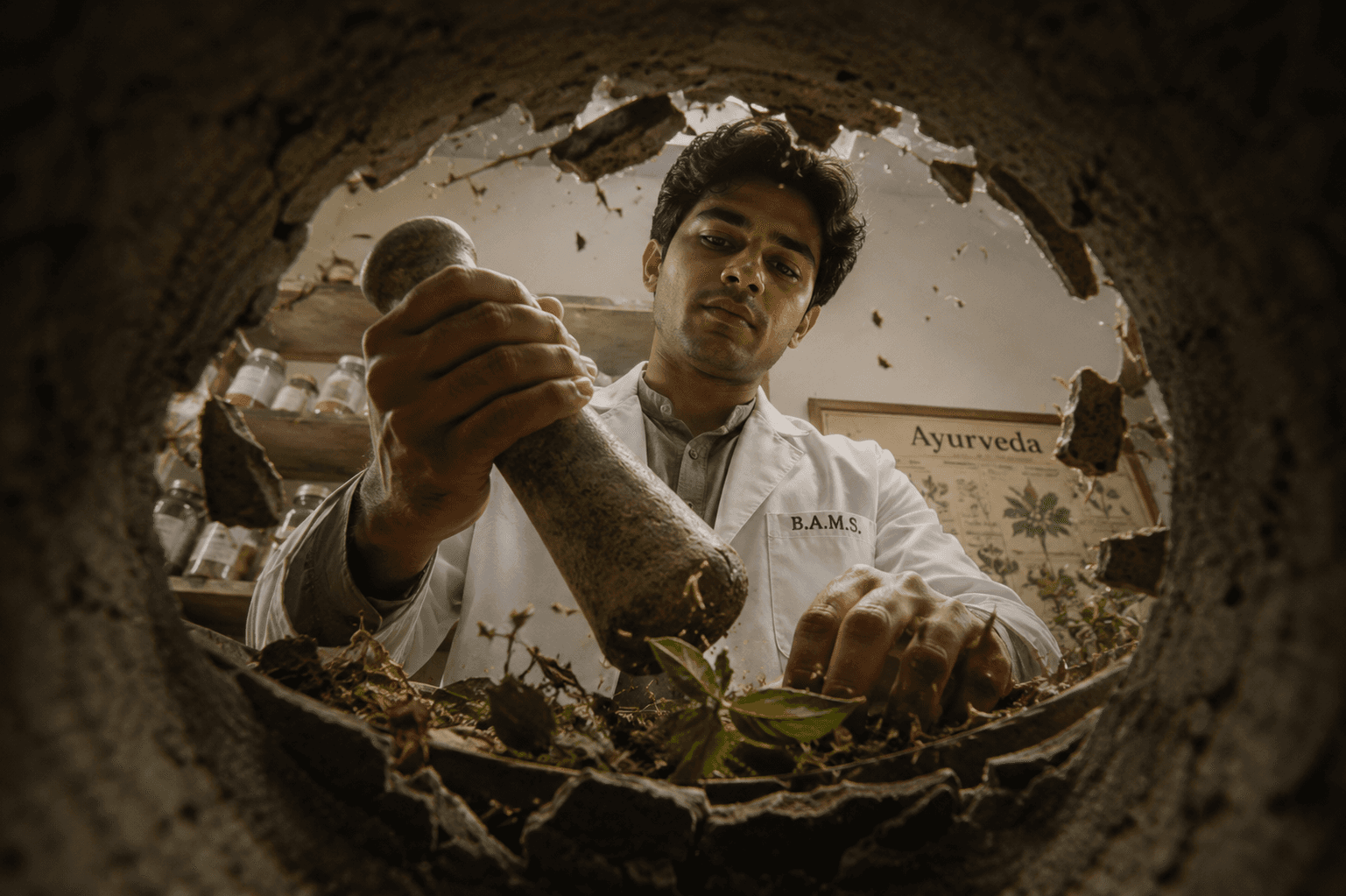
Pursuing a BAMS (Bachelor of Ayurvedic Medicine & Surgery) is an excellent choice for students who aspire to build a career in the field of Ayurveda, one of the world's oldest and most respected systems of medicine. Recognized by the National Commission for Indian System of Medicine (NCISM), BAMS is a professional undergraduate medical degree that combines the principles of traditional Ayurvedic medicine with modern medical sciences, preparing students to diagnose, prevent, and treat diseases through holistic healthcare practices.
Admission to BAMS is entirely based on the National Eligibility cum Entrance Test (NEET-UG). Qualifying NEET is mandatory for admission to Government Ayurvedic Colleges, Private Ayurvedic Colleges, Deemed Universities, and other NCISM-recognized institutions across India. A student's NEET score, All India Rank (AIR), category, domicile, reservation criteria, and participation in the counselling process determine the colleges and seat options available for admission.
The BAMS course spans 5.5 years, including 4.5 years of academic education followed by a 1-year compulsory rotating internship. Throughout the program, students study both classical Ayurvedic principles and modern medical subjects, including Anatomy, Physiology, Pathology, Pharmacology, General Medicine, Surgery, Panchakarma, Dravyaguna (Medicinal Plants), Rachana Sharir, Kriya Sharir, Agad Tantra, Kayachikitsa, Shalya Tantra, Shalakya Tantra, and Prasuti Tantra & Stri Roga. The curriculum also provides extensive clinical exposure through Ayurvedic hospitals and teaching institutions, allowing students to develop practical diagnostic and therapeutic skills.
One of the biggest misconceptions among students is that qualifying NEET alone guarantees admission into a BAMS college. In reality, admission depends on successfully participating in the counselling process conducted by the Ayush Admissions Central Counseling Committee (AACCC) for All India Quota, Central Universities, Deemed Universities, and National Institutes, along with the respective State AYUSH Counselling Authorities for State Quota seats. Understanding counselling rounds, seat allotment procedures, reservation policies, fee structures, and strategic choice filling is essential for securing admission to the desired college.
Depending on eligibility, students can seek admission through All India Quota (15%), State Quota (85%), Management Quota, and NRI Quota, depending on the participating institution. Since cut-offs, fee structures, and seat availability differ across colleges, proper counselling and college selection play a significant role in maximizing admission opportunities.
At Apex Edu, we provide comprehensive guidance throughout the BAMS admission journey. From NEET score analysis, college shortlisting, AACCC and State AYUSH counselling support, choice filling, documentation assistance, seat allotment guidance, and final admission support, our expert counsellors help students secure admission in the most suitable institution based on their NEET score, budget, preferences, and long-term career aspirations.
Pursuing a BAMS (Bachelor of Ayurvedic Medicine & Surgery) is an excellent choice for students who aspire to build a career in the field of Ayurveda, one of the world's oldest and most respected systems of medicine. Recognized by the National Commission for Indian System of Medicine (NCISM), BAMS is a professional undergraduate medical degree that combines the principles of traditional Ayurvedic medicine with modern medical sciences, preparing students to diagnose, prevent, and treat diseases through holistic healthcare practices.
Admission to BAMS is entirely based on the National Eligibility cum Entrance Test (NEET-UG). Qualifying NEET is mandatory for admission to Government Ayurvedic Colleges, Private Ayurvedic Colleges, Deemed Universities, and other NCISM-recognized institutions across India. A student's NEET score, All India Rank (AIR), category, domicile, reservation criteria, and participation in the counselling process determine the colleges and seat options available for admission.
The BAMS course spans 5.5 years, including 4.5 years of academic education followed by a 1-year compulsory rotating internship. Throughout the program, students study both classical Ayurvedic principles and modern medical subjects, including Anatomy, Physiology, Pathology, Pharmacology, General Medicine, Surgery, Panchakarma, Dravyaguna (Medicinal Plants), Rachana Sharir, Kriya Sharir, Agad Tantra, Kayachikitsa, Shalya Tantra, Shalakya Tantra, and Prasuti Tantra & Stri Roga. The curriculum also provides extensive clinical exposure through Ayurvedic hospitals and teaching institutions, allowing students to develop practical diagnostic and therapeutic skills.
One of the biggest misconceptions among students is that qualifying NEET alone guarantees admission into a BAMS college. In reality, admission depends on successfully participating in the counselling process conducted by the Ayush Admissions Central Counseling Committee (AACCC) for All India Quota, Central Universities, Deemed Universities, and National Institutes, along with the respective State AYUSH Counselling Authorities for State Quota seats. Understanding counselling rounds, seat allotment procedures, reservation policies, fee structures, and strategic choice filling is essential for securing admission to the desired college.
Depending on eligibility, students can seek admission through All India Quota (15%), State Quota (85%), Management Quota, and NRI Quota, depending on the participating institution. Since cut-offs, fee structures, and seat availability differ across colleges, proper counselling and college selection play a significant role in maximizing admission opportunities.
At Apex Edu, we provide comprehensive guidance throughout the BAMS admission journey. From NEET score analysis, college shortlisting, AACCC and State AYUSH counselling support, choice filling, documentation assistance, seat allotment guidance, and final admission support, our expert counsellors help students secure admission in the most suitable institution based on their NEET score, budget, preferences, and long-term career aspirations.